Author: Todd Scott

  • Trail Raises Surrounding Residential Property Values

    This abandoned railway is now part of the Clinton River Trail through Pontiac
    This abandoned railway is now a trail through Pontiac

    Back in 2001, I was working for the Rails-to-Trails Conservancy and taking photos of what is now the Clinton River Trail in Pontiac.  The rail line passed behind a cul-de-sac of new houses just west of downtown Pontiac.

    One of the homeowners approached me and asked what I was doing.  He didn’t seem too enthused about me walking behind these homes and taking photos.

    I began by explaining our plan to convert this abandoned rail line into a walking and biking trail.  He didn’t seem too sold on the idea, so I noted that trails increase the property values of surrounding homes.  That worked.

    He offered me a glass of cold lemonade and said if there was anything I needed, just ask.

    A new trail study out of Ohio only confirms what other studies have found and what I told that concerned homeowner:

    Across the United States, many conversions of abandoned railroad rights-of-ways into trails have faced opposition from surrounding property owners. Much of the opposition derives from the fear that developing trails would cause a decrease in property values because of loss of privacy, increase in noise, traffic, litter and crime.

    The objective of this study is to assess the impact of the Little Miami Scenic Trail on property values. To accomplish this task, the hedonic pricing technique was employed to measure the impact of the trail on single-family residential property values in southwest Ohio. Several of the variables used in this model were measured using Geographic Information Systems (GIS) software.

    The analysis suggests that, each foot increase in distance to the trail decreases the sale price of a sample property by $7.05. In other words, being closer to the Little Miami Scenic Trail adds value to the single family residential properties.

  • Extending the I-275 Bike Path North

    The current northern end of the I-275 bike path
    The current northern end of the I-275 bike path

    Yesterday we did some preliminary scouting with MDOT for a possible extension of the I-275 Bike Path.

    This extension would begin at the current north end of the I-275 path at Meadowbrook Road, just south of I-96.  The route would continue north and eventually head east to be within the M-5 corridor.

    It would intersect the old Coe Railroad, which should hopefully become Oakland Counties next big rails to trails conversion.  It would also intersect 13 Mile and 14 Mile Roads — both popular east-west road bike routes.

    The extension would end at Pontiac Trail.  From here one could continue north on the trails planned for Martin Road before heading west and picking up the Lakes Community Trail.

    There are no shortage of challenges for building this trail.  From wetlands to steep rolling hills, it’s going to take some smart design to keep the price tag reasonable, but MDOT is committed to getting it done.

  • A Hard-working mother of two — and a Cyclist

    The insignificant traffic levels on Woodward during the early morning make it an ideal choice for bicyclists
    The insignificant traffic levels on Woodward during the early morning (left) make it an ideal choice for bicyclists

    The Detroit Free Press ran a followup article on the bicyclist who was recently hit and killed in Royal Oak:

    Who rides a bike along Woodward Avenue near 12 Mile at 1:30 a.m.?

    The answer: a single mom raising two kids. With no car, she commuted by bike from southwest Detroit to Royal Oak to care for a 92-year-old man.

    Friends and family members describe Jackie Robinson as a fighter who had battled adversity and was working hard for her two boys, Bruce, 13, and Keith, 11.

    “She was a good person,” said Heather Weeks, a cousin. “She would give you the shirt off her back.”

    You can read the entire article here.

    As much as I enjoy and respect Bill McGraw, the article’s author, he does make one significant mistake.  He implies Woodward is always busy and perhaps not ideal for biking:

    Riding a bike on multilane Woodward north of 8 Mile can be harrowing: The speed limit in Royal Oak is 45, and an average of about 75,000 vehicles pass 12 Mile every day.

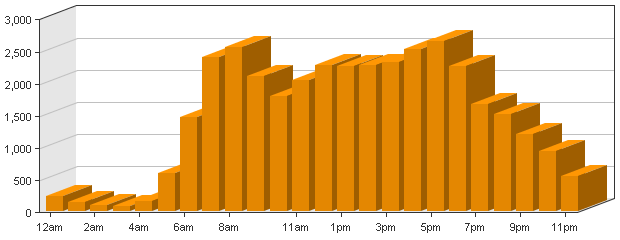
    Woodward Avenue south of 12 Mile at 1:30 AM is not harrowing.  The latest SEMCOG traffic count for this northbound stretch of road shows only 140 vehicles per hour on this well-lit, four-lane road.

    That’s just one car going past every 26 seconds across four lanes of traffic.  Harrowing?  That’s an ideal road choice for a cyclist.  There’s plenty of room for vehicles and bicycles to share Woodward in the early morning hours.

    And the frosting on the cake is according to MDOT, traffic levels have been declining on Woodward Avenue.

    Don’t Forget:  Anyone with information about this hit-and-run is strongly urged to call the Royal Oak Police at 248.246.3515 anytime.

  • Detroit climbs in Sustainability Rankings

    Vacated residential lots become farms in Detroit -- the opposite of what happens in sprawling suburbs
    Vacated residential lots become farms in Detroit — the opposite of what happens in sprawling suburbs

    A group called SustainLane recently ranked 50 U.S. cities for their efforts in becoming sustainable.

    Detroit jumped up an impressive 12 spots to finish 31st.

    Improved biking and walking certainly play a big role in boosting these sustainability rankings.  It certainly reinforces the fact that cycling advocates have so many positive reasons to push for our cause.  From safety to health, from clear air to sustainability, from kids getting to school and the high cost of fuel, there are a myriad of reasons why cities need to embrace improved biking and walking facilities.

    According to SustainLane’s summary for Detroit:

    America’s “Motor City” is bearing down on the sustainability throttle: the city’s green engine is heating up and has propelled it up twelve spots in SustainLane’s 2008 rankings. What’s fueling Detroit’s upswing? First and foremost, adaptive reuse of land abandoned from decades of suburban flight. Detroit boasts a thriving community garden network growing on vacant land across the city. Quality-of-life issues are a high priority for Detroit officials, who are planning for more greenways, connecting landmarks and bringing in new businesses. The city has already seen a successful transformation of its formerly-blighted riverfront into a bustling area of parks, plazas, and a five-mile recreation path. Expect to see more greening in the near future: City council president and head of the recently-formed “Green Task Force,” Kenneth V. Cockrel Jr., replaced the city’s mayor who resigned early September 2008.

    SustainLane also included some short local succcess stories.  Detroit’s was of the Dequindre Cut, “It’s Pronounced De-kwin-dur.”

  • Tri-Centennial State Park Construction Begins

    Some exciting construction work has begun on the Phase II expansion of the Tri-Centennial State Park on the Detroit Riverwalk.  This project will extend the Riverwalk from Rivard Plaza (where the carousel is) east towards the large grassy berm and then to Atwater.

    Below are some photos taken on September 25th by the DNR.