Author: Todd Scott

  • 2010 Elections: What they mean to Detroit cyclists

    Just some quick observations…

    Michigan House

    We lose cycling supporter (and Tour de Troit rider) Rep. Gabe Leland due to term limits. However, his replacement is cycling and trails advocate  Harvey Santana.

    Former Detroit City Councilmember Alberta Tinsley-Talabi was elected to the State House. She was a solid supporter of Detroit’s non-motorized plan on Council.

    Michigan Senate

    Rep. Coleman Young II, who sat on the House Transportation Committee and supported the Complete Streets legislation, is now heading to the Michigan Senate.

    Michigan Governor

    We didn’t know if there was much of a difference between the two gubernatorial candidates. Though Rick Synder was called out on the pedestrian bridge comment, he noted that he supported bike-friendly, walkable communities. He also pledged to help strengthen the city of Detroit. And, insider talk says Bill Rustem may play a key role in they Synder administration. Rustem is a former board member of the Michigan chapter of the Rails to Trails Conservancy and a board emeritus for the Michigan Trails and Greenways Alliance.

    The bigger question is what will happen with MDOT. Will MDOT Director Kirk Steudle remain? Under his leadership, MDOT supported the Complete Streets legislation. He also authored that great letter about Complete Streets.

    U.S. Congress

    The huge loss of Congressman James Oberstar of Minnesota is quite devastating for bicycle advocacy in the U.S.  Andy Clarke, Executive director of the League of American Bicyclists says, “I’m not going to lie – I’m depressed.”

    Congresswoman Carolyn Kilpatrick lost in the primary and was a member of the bicycle caucus. She’s replaced by Hansen Clarke.

    Congressman Mark Schauer had become a supporter of bicycling, especially through the efforts of PEAC. He lost his seat to Tim Walberg.

    And overall the lost of Democratic control of the House will have a major impact on bicycling. It makes John Boehner the Speaker and he has some history of not being too bike friendly. And it might take a whole lot more work to make the  next transportation bill bike friendly.

    As Clarke said, we’re now on the defensive.
  • More coverage on the Michigan Ave bike lanes

    They don’t appear to be done yet, but they’re getting there.

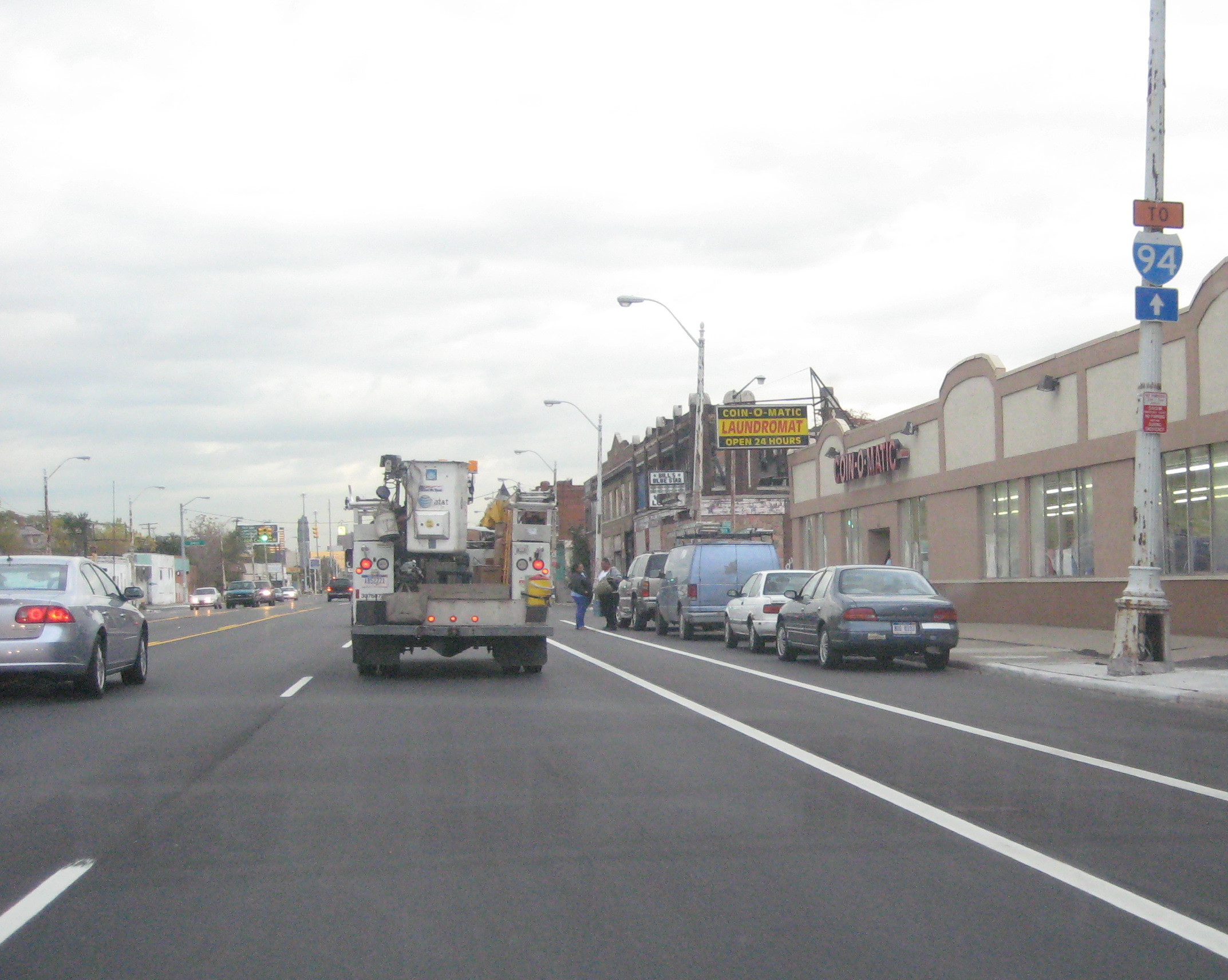
    The bike lane paint is on the ground for most of Michigan Avenue. The pavement markings and signage are the finishing touches and are not installed yet.

    When completed, this 2.5 mile stretch of Michigan Avenue from Livernois to Rosa Parks will have a more clearly defined space to bike in.

    When completed, these additional 5 miles (both sides of the road) means Detroit will have more miles of bike lanes then all the other communities in Oakland, Macomb, and Wayne Counties combined. That’s not so much a bragging point for Detroit as it is a sad reflection of how far behind everyone else is.

    Model D covered this topic as well. In these economic times, we’ve heard people ask about the additional cost of adding bike lanes. The MDOT project manager answered that question.

    Well, what’s notable is the addition of bike lanes, which reconfigures the trunk line into two lanes of vehicular traffic and one dedicated parking lane in either direction, a center turning lane and bike lanes. Bike lanes added a “negligible” cost to the overall $7.2 million project, according to Matthew Chynoweth, development engineer at the MDOT Detroit Transportation Service Center.

    So when your local road engineer says they can’t do a road diet and add bike lanes due to funding, “negligible” is a good word to use.

  • Give your answer at the ballot box

    Detroit cyclist Horatio “Good Roads” Earle ran for Michigan Senate in November of 1900. With his win, he went to Lansing and created the Michigan Department of Transportation (MDOT).

    By the way, the Good Roads of Earle’s time are the Complete Streets of today. In 1900, there were very few motorized vehicles on the road, no stop signs, no traffic signals, no crosswalks. Everyday was a Ciclovia. If a road were paved, it was a Complete Street.

    This is an excerpt from The Autobiography of “By Gum” Earle:

    My fourth effort was in 1900 as a candidate for state senator from the Third District in Michigan, and I won, which gave me a chance to officially promote the good roads cause in which I was so interested. Every paper in Detroit opposed my nomination, and when they lost out, they said the doughnut won, but I went to Lansing, and by gum, Michigan has shown the world how to build good roads.

    A good deal of my success in the campaign was due to the efforts in my behalf made by the “Detroit Wheelmen.” One of the most effective pieces of campaign literature was the one which follows, recalling the laws and privileges secured for the bicyclists, who were at that time in the hey-day of their strength and influence.

    PONDER A MINUTE

    Baggage law for you,
    Dry strip for you,
    Bicycle shelter for you,
    Bicycle ordinance for you,
    Hotel discount for you,
    Path protection law for you,
    Toll knocked out for you,
    Equal rights with horse for you,
    No tags on wheels for you,
    No lamps on wheels for you,
    No bells on wheels for you.

    Chief Consul Horatio S. Earle has been one who has worked without a cent of pay for these things. Will you get out and vote, and get others to vote for him for state senator, Third District, next Tuesday? Give your answer at the ballot box.

    League of American Wheelmen Committee

    This list echoes the one made my Edward Hines when he solicited bicyclists to join the Michigan Division of the L.A.W. Hine’s list provides more details on each item.

    Yes, nearly 110 years later we are fighting the same battles. We fought mandatory bicycle registration (“tags on wheels”) and are working on getting roll-on bicycle service with AMTRAK  and the M1 Rail (“baggage law”).

    And of course we’re still fighting for Good Roads.

  • DNRE Director Rebecca Humphries to step down

    Election time often brings more change than just elected officials.

    We received word today that the Rebecca Humphries, Director of the Department of Natural Resources and Environment is stepping down. Humphries has been a solid supporter of our state parks and trails.

    In fact, she was responsible for opening the trails to mountain biking at Cannonsburg State Game Area earlier in her career – no small feat.

    She’s always been approachable and balanced. She’ll certainly be missed.

    Here is the notice she sent today.

    Dear Colleagues,

    I wanted to let you know personally that I have accepted an offer from Ducks Unlimited to be the director of DU’s Great Lakes/Atlantic Regional Office based in Ann Arbor, beginning in January. Ducks Unlimited is an organization I have long respected, and this opportunity will allow me to continue my career in conservation.

    We have made much progress in the last several months in implementing the Governor’s transition plan for our new agency. I am proud of the work we do every day to protect the environment and manage our natural resources. I am confident that this work will continue under the new administration, and that you all will sustain the same level of commitment and dedication that I have witnessed in everything you do, from the day-to-day work to the crisis situations.

    For 32 years, I have been an employee of this department, and like many of you, I have worked through its many iterations and transitions. While some things change, your professionalism and passion remain steadfast, and are clearly evident in what you do.

    In the next two months, we will continue to work together on the issues that affect our natural resources and environment and prepare for a smooth transition with the new administration. It has been an honor for me to work with all of you, and our paths may likely cross again in my future role with Ducks Unlimited. If you are ever in the area of my new office in Ann Arbor, please stop by to say hello.

    Becky

  • Candidate pushes livability in Wayne County Commission election

    A recent Free Press article discusses current Michigan senators running for seats on the Wayne County Commission.

    It’s great to see Senator Raymond Basham mention livability — a term that’s getting much use by Ray LaHood, the U.S. DOT Secretary.

    Basham, running in the 15th District, is most recently known for spearheading the smoking ban in Michigan this year. He also supported raising the state’s minimum wage.

    At the county level, he said he wants to improve transportation, enforce environmental laws and create “livable cities” so residents can walk and bike in their communities.

    That’s great to read.

    While Wayne County has said they no longer oppose bike lanes on their roads, they haven’t built any yet claiming it’s a money issue. Still, there are funding sources that pay for adding such features and we’re not aware of the County pursuing those.

    However, there are early discussions about adding bike lanes to the County’s portion of Conner Avenue in Detroit as part of the Conner Creek Greenway.

    We could use a leader on this issue on the County Commission.

    We should note that Basham was also a leader in the Michigan Senate. He’s been supportive of bike friendly legislation and Complete Streets, especially as Minority Vice Chair on the Senate Transportation Committee.

    Basham is running in Wayne County’s 15th district which includes Romulus, Taylor, Flat Rock, Huron Township and Brownstown Township.