June 9th, 2008
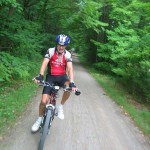 The Free Press ran a couple great articles on biking and trails today.
From Trails are the new amenity:
The growing network of recreational trails in metro Detroit is becoming a magnet for home builders and business owners who are capitalizing on the popularity of natural pathways that link communities and offer a reprieve from sprawl.
“Everyone used to want to live near a golf course,” John Crumm, Macomb County’s program manager for planning and environmental services, said. “Now trails are becoming the most popular amenity.”
The demand to live close to trails is rising with the price of gas and a desire to get away, and it’s jacking up adjacent home values by an average of 15% to 20% in metro Detroit, according to home builders and economic development specialists.
And from 25 miles of paths and trails are being added in Detroit, suburbs:
Michiganders still call Detroit the Motor City, yet their state also is a leader in paths for nonmotorized transit. Michigan is second only to Wisconsin in rail trails, the routes on old rail lines, according to the national Rails-to-Trails Conservancy in Washington, D.C. Michigan has 1,491 rail-trail miles compared with Wisconsin’s 1,552 miles, the group says.
And new projects are forging ahead with federal transportation dollars, state oil and gas royalties in the Michigan Natural Resources Trust Fund and grants from the nonprofit Community Foundation for Southeast Michigan.
Boosters of these recreation routes say the investment is well worth it, as Michigan’s obesity rate climbs, roads clog with cars and gasoline streaks past $4 a gallon.
Tags: Trails
Posted in Trails | 1 Comment »
June 9th, 2008
If we’re going to make bicycling safer in the U.S., we need to be honest about what needs to be done.
The primary safety solution from many groups is to wear a helmet. But, according to research, wearing helmets is not the best way to improve bicycling safety. Creating safe bicycle facilities, increasing bicycle use, and educating users are the best means for improving safety. The results from the Netherlands support this. It’s one of the safest places to bike in the world yet almost no one wears helmets.
What do you call a cyclist wearing a helmet in the Netherlands? A tourist.
|
Helmet use |
Fatalities per 100 million trips |
| U.S. |
38% |
21 |
| Germany |
2% |
8.2 |
| Netherlands |
0.1% |
1.6 |
One study summarizes the six priorities that Germany and the Netherlands use to make biking so safe:
- Better Facilities for Walking and Cycling
- Traffic Calming of Residential Neighborhoods
- Urban Design Oriented to People and Not Cars
- Restrictions on Motor Vehicle Use
- Traffic Education
- Traffic Regulations and Enforcement
The big challenge in Metro Detroit is many road agencies and municipalities don’t know what better bicycling facilities are. For example, the Road Commission of Oakland County refuses to acknowledge much less use best practices for bicycling facilities. They ignore the American Association of State Highway Officials (AASHTO) guidelines for bicycling facilities. They ignore Federal Highway Administration guidance. They ignore bicycling safety studies that show their policies have been consistently found to be unsafe.
And similarly, many cities have followed the Road Commission’s lead. Rochester Hills and West Bloomfield have pursued wide sidewalks (ironically called “safety” paths) despite the overwhelming evidence that these are not safe options for cyclists.
If we truly want safe cycling, we need to start by forcing our local road agencies and municipalities to use best practices and provide safe non-motorized transportation options for cyclists. This should be our primary campaign. And that message needs to come from cyclists, citizens, AAA, medical professionals, health experts, the Traffic Improvement Association (TIA), and others.
This doesn’t mean helmet use should be discouraged. Helmets can lessen injuries when cyclists are hit. But it’s much better to prevent those “hits” in the first place.
Tags: AASHTO, FHWA, Germany, Helmets, Netherlands, On-road bicycling, RCOC, Safety, TIA
Posted in On-road bicycling, Planning, Safety | 4 Comments »
June 4th, 2008
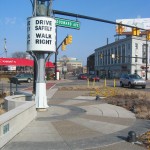 Ferndale’s bike network was largely initiated with strong support from former City Manager Tom Barwin. The network’s bike lanes were some of the first properly designed lanes in the motor city.
That given, it should be of little surprise that he’s receiving kudos on a Chicago bike blog. Tom is now the Village Manager for Oak Park, Illinois:
The Village of Oak Park, which has already earned recognition for such environmental accomplishments as building the state’s first green public works facility, has added bicycles to its fleet of more than100 vehicles powered by alternative fuels. Two bikes have been refurbished, equipped with panniers and locks, and have been made available for use by employees in the Department of Public Works. Owen Read, the Oak Park Pedestrian and Bicycle Ambassador, yesterday visited the Oak Park DPW for an hour-long information session touching on reasons to ride, bicycle safety, and rules of the road. A number of Public Works employees, from experienced cycle commuters to eager novices, showed up to ask questions and share their own experiences.
Tags: bike lanes, Chicago, Ferndale, Tom Barwin
Posted in General bike news, On-road bicycling | No Comments »
June 2nd, 2008
 They’re new and still experimental, but are expected to become formalized signage method by next year.
They’re called “sharrows” and they are pavement markings that help mark bike routes on roads. These are a complement to bike lane pavement markings. The difference is bike lanes are separated facilities (from motor vehicles) where shared lanes have both cars and bikes.
According to draft MUTCD language, the benefit of sharrow pavement markings are they:
- Assist bicyclists with lateral positioning in a shared lane with on-street parallel parking in order to reduce the chance of a bicyclist’s impacting the open door of a parked vehicle,
- Assist bicyclists with lateral positioning in lanes that are too narrow for a motor vehicle and a bicycle to travel side by side within the same traffic lane,
- Alert road users of the lateral location bicyclists are likely to occupy within the traveled way,
- Encourage safe passing of bicyclists by motorists, and
- Reduce the incidence of wrong-way bicycling.
There are limits to their use.
- They should not be on roads where the speed limits above 35 MPH.
- They should not be on shoulders or in bike lanes
Sharrows may also produce cost and time savings.
Sometimes roadways are simply not wide enough for a bike lane. Sometimes road diets (converting an exising lane of travel into bike lanes) are not practical or possible. And even when a road diet might be the solution, some cities require traffic studies in advance. These studies can cost $10K to $30K. The value of a separated bike lane facility may not justify these costs when a shared lane would work equally well. And sharrows provide a new and improved means for marking them.
Tags: MUTCD, On-road bicycling, road diet, sharrows
Posted in On-road bicycling | No Comments »
May 29th, 2008
 Kryptonite just released their Top 10 Worst Cities for Bike Theft and Detroit is not on the list. While I’ve not experienced any theft or attempted theft, others have. Nonetheless, here’s the list:
1. Philadelphia, PA
2. Chicago, IL
3. New York City, NY
4. San Francisco, CA
5. Tucson, AZ (tie)
Portland, OR (tie)
7. Denver, CO
8. New Haven, CT
9. Cambridge, MA
10. Austin, TX
Tags: bike theft
Posted in General bike news | No Comments »
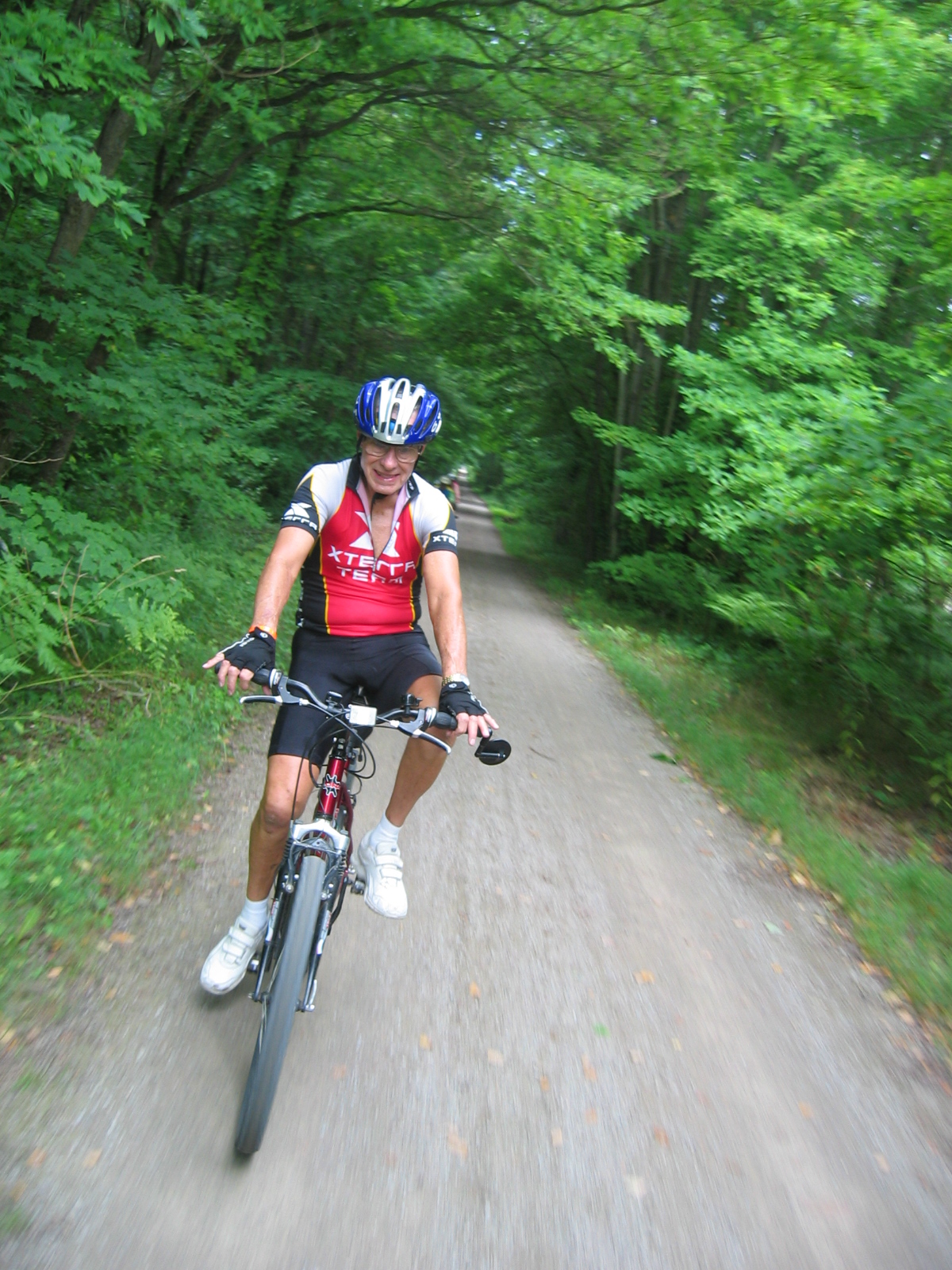 The Free Press ran a couple great articles on biking and trails today.
