Posts Tagged ‘sprawl’

Lyon Township: Still trying to ruin a good trail

Friday, April 10th, 2009

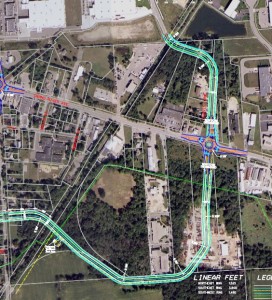
ringroadThe Huron Valley Trail provides a connection between South Lyon to Wixom. People use the trail because it’s away from cars, it’s green and just a great place to get away.

Lyon Township is trying to change that.

They want to re-route the rail-trail just south of I-96 and east of Milford Road. Rather than run straight through some greenspace, they want to increase their sprawl and build a big ring road.

Under the latest plan, the trail would be routed along this busy ring road. They also want to allow active driveways across the trail, which means it would no longer meet AASHTO guidelines — something that is required by township ordinance.

The DNR is saying “no”. They own the trail property. It was purchased and developed with taxpayer dollars as a recreational facility. They are defending this public investment and rightly so.

Another defender is Fred Dore, long time supporter and rider of this trail. He’s leading the grassroots effort to protect the trail from “being besieged by commercial development interests that may forever damage its utility, safety and natural beauty.”

He’s urging trail users to contact the DNR and Lyon Township officials to prevent this damaging trail reroute.

Link: Fred Dore’s letter to the DNR Director

The sad part about this is Lyon Township officials are claiming this is preventing growth. Southeast Michigan is not growing. Lyon Township is only getting larger because some other community is shrinking.

This is just another example of how the lack of regional planning hurts Metro Detroit’s long term economic health.

It’s just sprawl. And it’s certainly no justification for damaging our public investment in trails.

Monday Media Roundup

Monday, March 2nd, 2009

Little Stimulus Money for Michigan State Parks

Despite the huge backlog in much-needed capital improvements, the Lansing State Journal is reporting that our state parks will not be receiving much economic stimulus funding.

Before all the details of the federal stimulus plan were known, the department put together a wish list of projects it could have ready to go in 90 days. The list included 586 proposals totaling $356.6 million, including more than $200 million and more than 300 projects involving park improvements. So far, only three DNR requests have got to the final round for consideration by federal officials.

Of course the stimulus money is going towards road projects. Our state parks have hundreds of miles of roads, many of which require repairs. However, the state considers these parks roads as “private” and not eligible for funding. These roads don’t even receive funding from the state fuel tax. This is just another fundamental reason why our state park operations are not sustainable.

Best Cars in a Crash (but not the safest)

Auto-centric viewpoints are common. Here’s one that’s often blindy repeated.

Forbes Magazine is reporting on the best cars in a crash and only considers safety from the viewpoint of those inside the car. A quarter of all road fatalities in Metro Detroit are pedestrians and cyclists. Which cars are safer for them? Large SUVs that take more lane width, have larger blind spots, have longer stopping distances, and are less manueverable?

Another problem with this type of article is it assumes a crash is inevitable. In a one-on-one situation, more manueverable, lighter vehicles are more likely to avoid a crash than their heavier counterparts.

This topic was well covered in an older New Yorker article. They review a study of fatalities per million cars which includes drivers, passengers, and the other crash victims. Mid-size cars were in found to cause the least number of fatalities.

Conservative Voice against Sprawl

We’ve spoken up against sprawl largely because it results in auto-centric communities that are often unsafe or impractical to bike or walk in.

Christopher Caldwell has this excellent op-ed in the Financial Times that points out the costly and inefficient economics behind sprawl:

In 1958, the great journalist William Whyte coined the term “sprawl”, in an article for Fortune. He noted with horror that, a mere two years after the Highway Act, already huge patches of once green countryside have been turned into vast, smog-filled deserts that are neither city, suburb, nor country. Developments were concentrated in random political no-man’s-lands near interchanges and exits. Road lobbyists and real estate developers colluded against meaningful regulation and planning, with the result, Whyte wrote, that “development is being left almost entirely in the hands of the speculative builder”.

Whyte warned that sprawl was not just bad aesthetics but bad economics. A subtler and more serious problem than blight was that, for local authorities, the cost of providing utilities and other services was exorbitant. “There is not only the cost of running sewers and water mains and storm drains out to Happy Acres,” Whyte wrote, “but much more road, per family served, has to be paved and maintained.” The infrastructure network that came out of the Highway Act had higher overheads than the one it replaced. It became a bottomless pit of spending.

Of course the Road Commission for Oakland County is paying the price for building a sprawled road network that it can no longer afford to maintain. They did no land use planning. And the Oakland County Commission has regularly selected road commissioners from the county’s sprawling communities, so this outcome is no surprise.

And the article even includes a nod to Detroit: “The encirclement of Detroit’s neighbourhoods by highways is often cited as a primary cause of its decline.”
U.S. Mayors Climate Protection Agreement

Friday, January 30th, 2009

headerlogoYesterday Mayor Cockrel signed the U.S. Conference of Mayors Climate Protection Act.  He joins a growing list of other Metro Detroit signees that have done the same, including:

  • John Hieftje (Ann Arbor)
  • Marilyn Stephan (Berkley)
  • Daniel Paletko (Dearborn Heights)
  • Robert Porter (Ferndale)
  • James Ellison (Royal Oak)
  • Gretchen Driskell (Saline)
  • Brenda Lawrence (Southfield)
  • Norma Wurmlinger (Southgate)
  • Cameron Priebe (Taylor)
  • David Flaisher (Township of West Bloomfield)
  • Mark Steenbergh (Warren)
  • Paul Schreiber (Ypsilanti)

Part of this agreement includes the following:

We will strive to meet or exceed Kyoto Protocol targets for reducing global warming pollution by taking actions in our own operations and communities such as:

2. Adopt and enforce land-use policies that reduce sprawl, preserve open space, and create compact, walkable urban communities;
3. Promote transportation options such as bicycle trails, commute trip reduction programs, incentives for car pooling and public transit;

There’s no surprise that many of these Michigan cities have taken the lead on bicycle facility development.  Some have not.  For those communities that have not seen the light — or made the commitment to improve biking — this may be another justification to help push them along.

New Mobility Agenda

Tuesday, January 20th, 2009

At a recent transportation engineer meeting in Farmington Hills a presenter told the following story.

An Australian businessman said that when he’s in the U.S., he schedules 3 meetings per day.  When in Australia, he schedules 4 per day, but when in Europe, he can handle 5 meetings per day.

In the U.S. he spent more time traveling between meetings compared with being in them.

The irony is there is more mobility in the U.S.  We have high-speed roads and expressways allowing people to move more quickly.  In Europe, transportation is not as fast, however, this has promoted greater density.  In other words, everything’s closer together.

This same issue was raised by Glatting-Jackson transportation engineer Ian Lockwood during his presentations in Detroit.  The more cities increase mobility, the more everything spreads out.

Accessibility/new mobility — being able to readily get between locations — is more valuable than high-speed mobility.

That’s a concept that’s been lost not only on most Metro Detroit road planners but on people like Oakland County executive L. Brooks Patterson.  Patterson has been sprawl promoter but has not connected the dots showing that inefficient land use leads to an inefficient and uncompetitive business environment — with or without gas at $4 a gallon.

Of course biking and walking suffer greatly when communities pursue high-speed mobility.  High-speed roads are rarely bike friendly.  And in these less dense communities, everything is further away which makes cycling and walking less attractive.  Lower density also makes public transit less effective.

Here is a great Streetfilm video from Paris that talks about how they’re doing things right.  Their engineers look at how to efficiently move people not cars.  It’s pretty basic and common sense.

The Potential Downside to the Economic Stimulus

Wednesday, December 31st, 2008

There’s been a big push by many groups to get Green projects in the Obama economic stimulus package.  We’ve already mentioned the Rails-to-Trails Conservancy’s push.  The DNR Parks division has submitted about a quarter-million in infrastructure projects.  The Detroit Greenways Coalition has their trails submitted as well.

That’s all the good news.

The fear however is this stimulus package will also fund a significant amount of road expansion.

From Bloomberg.com:

While many states are keeping their project lists secret, plans that have surfaced show why environmentalists and some development experts say much of the stimulus spending may promote urban sprawl while scrimping on more green-friendly rail and mass transit.

“It’s a lot of more of the same,” said Robert Puentes, a metropolitan growth and development expert at the Brookings Institution in Washington who is tracking the legislation. “You build a lot of new highways, continue to decentralize” urban and suburban communities and “pull resources away from transit.”

And decentralizing/sprawl also hurts bikability and walkability.

Some local concerns involve planned expressway expansion, notably I-75 in Oakland County and I-94 in Detroit.  Neither project made financial sense long before the recent declines in vehicle miles traveled.  Now they make less sense.

And they’re certainly not green, but they might get in the stimulus package.

The I-94 project is especially bad in that it would remove nine bridges over the expressways — permanently blocking bicycle routes within Detroit’s non-motorized transportation master plan.

And because the highway expansion was planned before the non-motorized plan, MDOT is ignoring the latter.  However, reading their Final Environmental Impact Statement only shows that MDOT wasn’t going to let non-motorized priorities get in the way of an expressway expansion.

That said, there’s not too much we can do until MDOT’s economic stimulus list becomes public and we see what’s on the list.