Archive for the ‘Planning’ Category

MDOT seeks input on a Huron Valley Trail detour

Friday, October 8th, 2010

There is a bridge that carries I-96 traffic over the Huron Valley Trail just east of Milford Road. As part of a larger freeway construction project, MDOT wants to replace the bridge with a low maintenance box culvert. (The Huron Valley Trail currently passes under Kensington Road in a box culvert at Island Lake State Recreation Area.)

When MDOT initially asked the Huron Valley Trail committee about creating a detour, they declined. It appears some minds have changed.

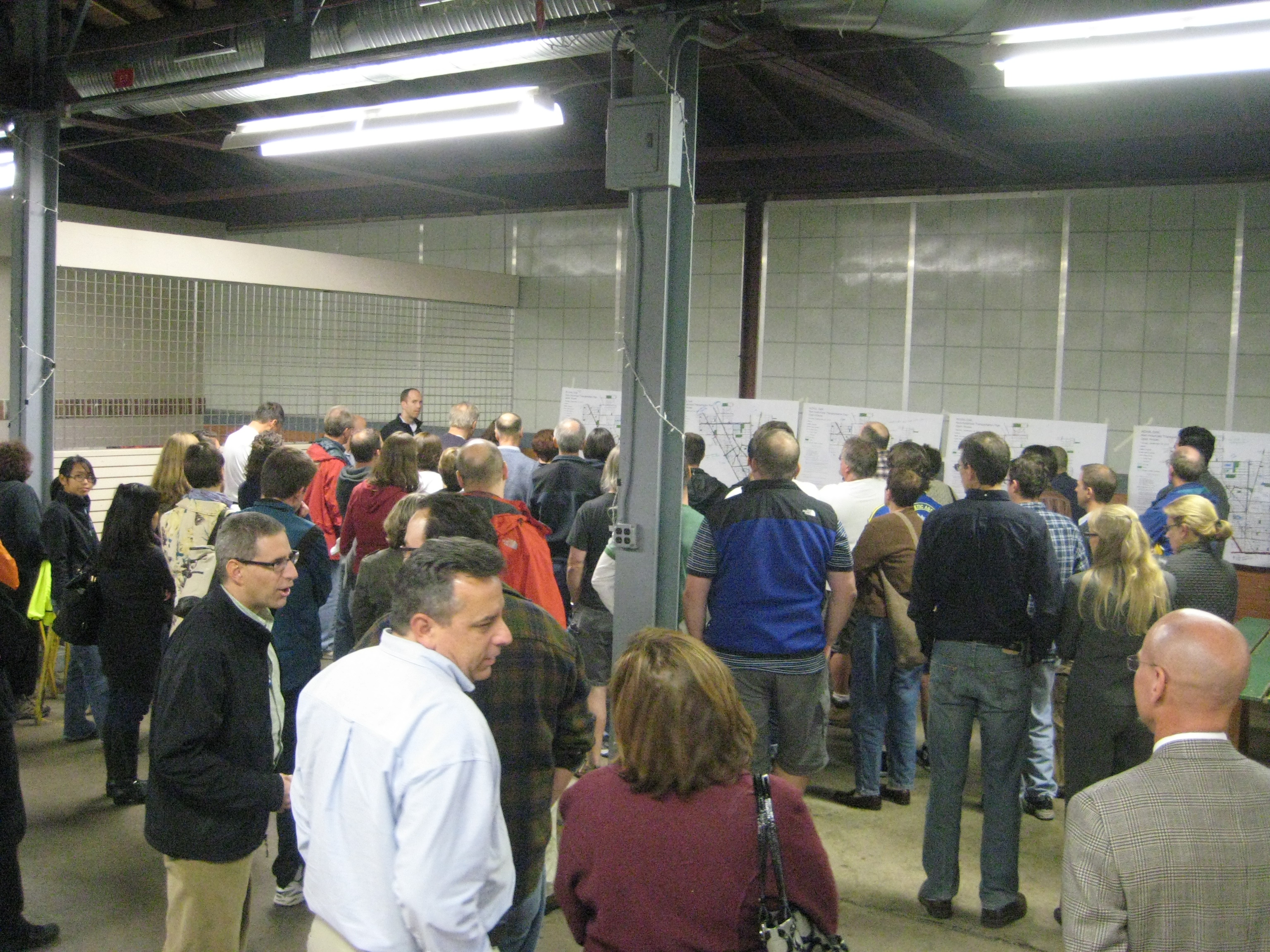
MDOT is now hosting a public meeting to discuss having a trail detour.

The Michigan Department of Transportation (MDOT) is making improvements in your community. The Huron Valley Trail is expected to be closed under the railroad bridge in the Spring of 2011 & we need your help. On October 13, 2010, stop by anytime between 3pm-7pm to share your ideas and be a part of the planning process.

We’ll be at the Lyon Township Municipal Center, 58000 Grand River Ave about½ mile west of Milford Rd.

See you there!

For more information, call Sue Datta at (248) 483-5135.

It seems to us that this might be a good time to put bike lanes on Milford Road.

Also, if you want to stay on top of issues like this, there is a new Friends of the Huron Valley Trail email list.
Suburban Updates: Royal Oak & Livonia

Friday, October 8th, 2010

Royal Oak Bike and Dine

A kickoff planning meeting for a progressive bike and dine event in Royal Oak is tomorrow, October 9th at 6pm.  The Bike and Dine itself would be held on Thursday, October 21st.

The brief 30-minute meeting is being held at the bar of Lily’s Seafood, 410 S. Washington in Downtown Royal Oak.

There is a Facebook event page set up for this meeting.

Livonia to look into planning

The city of Livonia is determining what is involved in creating a non-motorized transportation plan. From the Livonia City Council minutes of September 22nd.

On a motion by Brosnan, seconded by Toy, and unanimously adopted, it was:

#322-10 RESOLVED, that having considered the report and recommendation of the Infrastructure and Community Transit Committee, dated September 1, 2010, submitted pursuant to Council Resolution 20-10, regarding the City developing a connectivity plan for non-motorized transportation, the Council does hereby refer the subject of outlining the elements necessary to create a master plan for non-motorized transportation, including the estimated costs of engaging in the process, to the Administration for its report and recommendation.

This is very promising step for Livonia. Of course estimating the costs is perhaps an easier task than finding the funding.

Large cities like Livonia receive enough state road funding allocated to non-motorized transportation to pay for such plans. However, it’s fairly safe to assume that this allocated money is being spent on sidewalks and crosswalks.

Woodward to get light rail and “bike paths”?

Thursday, October 7th, 2010

The Varsity News is reporting on a transportation symposium held at the University of Detroit-Mercy last week.

The symposium included a discussion on the proposed light rail project currently being planned for Woodward. It is hoped that ground will be broken on the first phase of this project by late next year.

According to the article, one person raised concerns about pedestrian and bicyclist safety.

[Board president of M1 Rail, Matt] Cullen said the system “will be very pedestrian friendly.”

The rail line will have stops at major sites, such as stadiums, colleges and the New Center area. It will create more foot traffic, and there will also be a bike bath.

“It allows you to explore further,” Cullen said.

We wonder if he meant bike lanes on Woodward. Others have asked for them and rumor is they are feasible.

If this is the case, it’s a big improvement over what Cullen told us last winter. He said bikes might be pushed off Woodward.

Light Rail Community Workshops

And speaking on the light rail project, DDOT is hosting community workshops next week.

Here are the details:

(more…)

Nearly 100 turn out for Royal Oak planning

Wednesday, October 6th, 2010

Last week the Royal Oak Review attended the city’s initial meeting to discuss non-motorized planning — how to make it easy and safer for bicyclists and pedestrians in Royal Oak.

They’ve just published this article titled Pedal Power:

Mayor Jim Ellison said it was very encouraging to see all the people at the meeting and the ideas being tossed around. He said while funding is tight, having a plan is important.

Tom Regan, who helped start the movement for the city to develop a non-motorized plan, said he was happy to see the large turnout.

“What we’re demonstrating to the city officials and staff is that people in Royal Oak genuinely want these changes, and we’ll have an intelligent plan to make it happen,” he said.

If you want to stay on top of this planning effort, please “like” the non-motorized plan in Facebook.

Or if you were unable to attend and would like to submit comments, you can send them to Marissa Dolin at the Active Transportation Alliance.

Jane Jacobs: Going beyond the simple needs

Tuesday, October 5th, 2010

The My Wheels are Turning blog has another great article about urban design in Traverse City. That article reminds us of this Jane Jacobs quote.

Automobiles are often conveniently tagged as the villains responsible for the ills of cities and the disappointments and futilities of city planning. But the destructive effects of automobiles are much less a cause than a symptom of our incompetence at city building. The simple needs of automobiles are more easily understood and satisfied than the complex needs of cities, and a growing number of planners and designers have come to believe that if they can only solve the problems of traffic, they will thereby have solved the major problems of cities. Cities have much more intricate economic and social concerns than automobile traffic. How can you know what to try with traffic until you know how the city itself works, and what else it needs to do with its streets? You can’t.
— Jane Jacobs, Death and Life of Great American Cities

Bicycle advocates can find many examples to support Jacob’s quote. It’s relatively easy to define transportation problems in terms of motor vehicle levels of service (LOS) and average daily traffic (ADT). LOS and ADTs are easily measured and quantified for motor vehicles.

How do you measure real and perceived safety issues that create latent demand for non-motorized transportation options?

There’s also been recent discussion nationally about how congestion is measured in the U.S. This discussion was kicked off with the recent CEO for Cities report called, Driven Apart: How sprawl is lengthening our commutes and why misleading mobility measures are making things worse.

A new report from CEOs for Cities unveils the real reason Americans spend so much time in traffic and offers a dramatic critique of the 25 year old industry standard created by the Texas Transportation Institute’s Urban Mobility Report (UMR) – often used to justify billions of dollars in expenditures to build new roads and highways…

A close examination shows that the UMR has a number of major flaws that misstate and exaggerate the effects of congestion, particularly the Travel Time Index (TTI).  TTI is the ratio of average peak hour travel times to average free flow travel times… Because this methodology does not take into account travel distances, it universally rewards cities that are spread out as opposed to compact urban areas.

It’s bottom line, common sense conclusion: “What creates traffic jams isn’t more cars and fewer highways, it’s sprawl.”

And Transportation for America published this article today which concurs.

The cycle is familiar by now. A study tells us what we all know: our roads are congested. We pour billions into new roads and lanes to “reduce congestion.” Then the study comes out two years later and just as before, our roads are still congested. There’s a call for new roads, new roads open up, we drive further and further, congestion goes up. Rinse and repeat.

That hypothetical study exists in Metro Detroit. It’s SEMCOG’s Congestion Management System Plan. It fails to mention sprawl as a possible cause for congestion (and never mentions increased bicycling as a partial solution.)

It does focus plenty on the LOS’s for motorists during peak travel time.